
RUNTIME
Carlo Ferraris
Michael Fliri*
Mauro Folci
Norma Jeane
Iva Kontic
Bruno Muzzolini
Emilija Škarnulytė
30.05–18.07.26
press release
Banquet is pleased to present its first in-gallery video screening, whose program features video artworks by, in order: Mauro Folci, Emilija Škarnulytė, Bruno Muzzolini, Iva Kontić, Michael Fliri, Carlo Ferraris, Norma Jeane. The screening runs twice daily, Thursday through Saturday, and by appointment.
Carlo Ferraris
Counterclockwise
HD video, 1’36”, 2010
Director of Photography: Corrado Serri, Gaffer: Emanuele Bernabei, Tamer: Redy Montigo, Lion: Simba, with the participation of the Montigo circus family
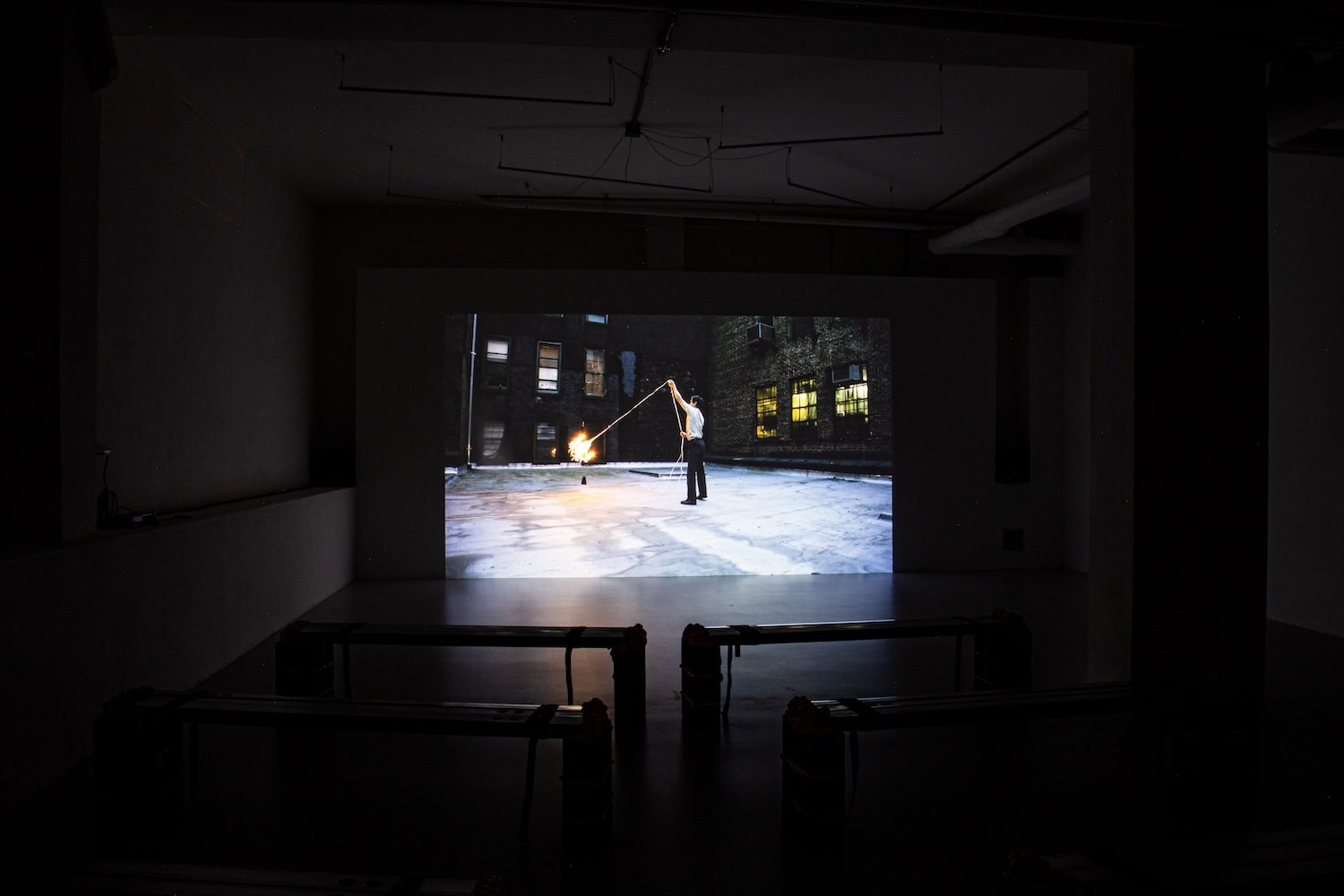
The chandelier hangs in the street like a misplaced domestic relic, both familiar and strangely alien. Its electric glow suggests order, refinement, and controlled illumination, yet in this setting it becomes theatrical and unsettling. The megaphone introduces a different kind of power—one that projects outward, demands attention, and occupies public space through sound. Together, these objects create a tension between intimacy and authority, between private ritual and public declaration. What normally belongs indoors is displaced into the urban environment, where its meaning begins to shift.
The chandelier no longer offers comfort; it becomes a spectacle, an intrusion, a signal without clear instruction. The megaphone suggests communication, but also command, amplification, and the possibility of noise overpowering meaning. By pairing these symbols, the work examines how systems of control make themselves visible and audible in everyday life. Electric light here is not guidance, but a manufactured presence—steady, artificial, and emotionally distant. The piece asks how familiar technologies become strange when removed from their expected context. It explores the moment when ordinary objects begin to feel foreign, even threatening, within the city.
Born in 1960 in Romagnano Sesia, Carlo Ferraris lives and works in New York, where he has developed a practice that draws from everyday reality only to distance itself from it to a certain degree. While many of his photographs, sculptures and videos can be interpreted as a critique on social and cultural history, his works are always conceptual in their intent and reject any clear narrative platform of establishing meaning. The disjunction and opposition add a strange depth to the unfolding occurrences. He affects our senses and understanding in new and unexpected ways, his narrative content loaded with ambiguous irony.
Michael Fliri
0O°°°oo°0Oo°O0
Single channel video, 3’55”, 2010
*courtesy the artist and Galleria Raffaella Cortese, Milan – Albisola
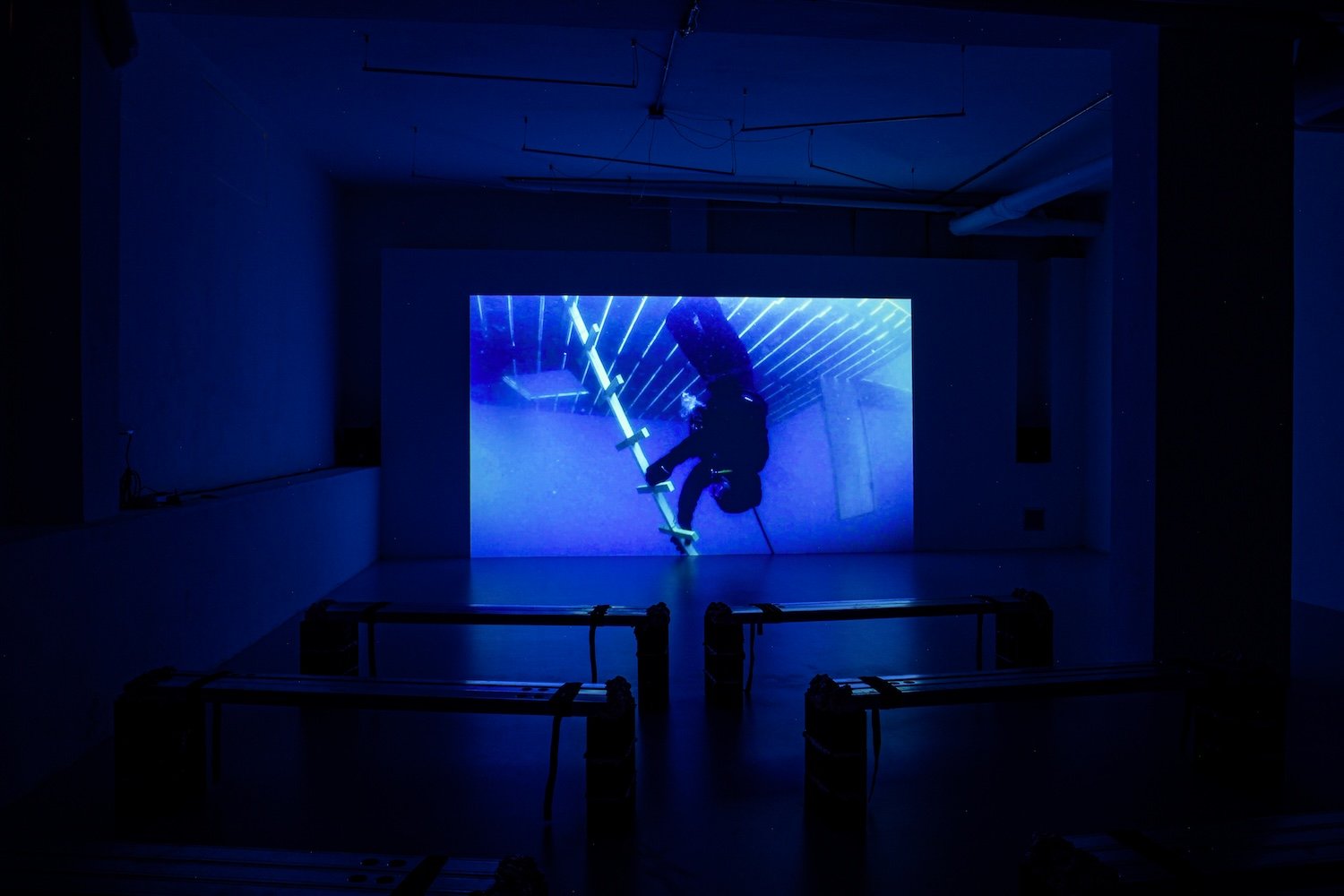
The buoyant force of water is used to turn the world upside down. The body underwater, pressed against the wooden platform floating on the surface, is able to move freely with its legs pointing upward. Up and down take on a different interpretation, and the alienating new situation in which the artist finds themselves—in an environment where every point of reference is lost—acquires different meanings.
Michael Fliri was born in Tubre, Italy, in 1978. He lives and works in Zürich, Switzerland, and South Tyrol, Italy.
Subtle and nuanced, the art of Michael Fliri exists on the thresholds between performance, sculpture, photography and video. In his practice, which cannot be subsumed under any single heading, he investigates concepts such as metamorphosis, mutation and disguise: the protagonists in his work – often Fliri himself– time and again undergo a process of transformation.
Body, landscape, a thought-out theme and imaginative metaphors together form a compelling whole. “For me transformation means new possibilities, new opportunities. Everything is in motion, not definite. The idea of the not-defined is what interests me most”, states the artist. Central to his work seems to be question of what determines who and what we are. What is our identity? How do we form our image of ourselves? Are we really who we think we are?
Fliri presents himself to the viewer and leaves them on their own, faced by changes. Masks and disguises have always been tied to concepts of changing and multiplicity; they unfold new possibilities, veil and unveil hidden aspects. Fliri’s actions allow for the construction of suspended reality, images so dense and poetic, so enigmatic and dreamy, account for the continuous and mutable flux to which everything is inevitably drawn, but first of all, they reach each one of us in our personal wish of metamorphosis.
Mauro Folci
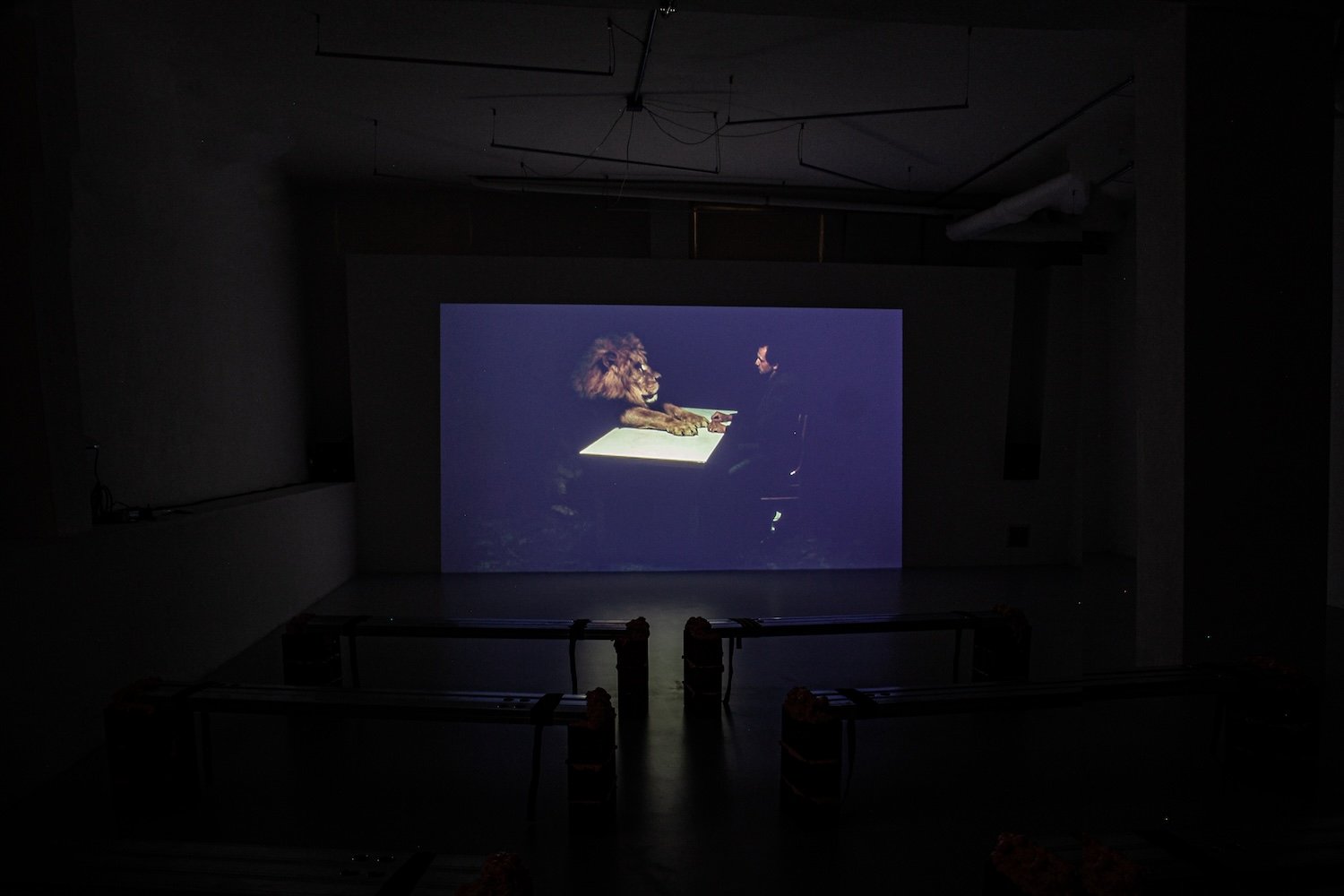
Noia
Video, DVD, 3’33”, 2009
Director of Photography: Corrado Serri, Gaffer: Emanuele Bernabei, Tamer: Redy Montigo, Lion: Simba, with the participation of the Montigo circus family
Noia is the result of a fortuitous chain of connections between dissimilar things, on one hand the boredom of Leopardi and Heidegger, on the other the unexpected encounter, in the galleries of the Capodimonte Museum in Naples, with Antonio Colantonio’s Saint Jerome in his Study (1444), in which the saint removes a thorn from a lion’s paw. In the gesturing between the saint’s hands and the lion’s paws I felt I had finally captured the crystalline image I had long been searching for of a profound boredom, as described by the poet and the philosopher, sensing an analogy between the animal’s stupor and the inner state of boredom itself. Boredom is considered a potency, as the fundamental mood that characterises the human animal and without which life, thought, and philosophy would not be possible. Leopardi speaks of boredom as happiness in its purest form, always in potency of course, and Heidegger of ultra-potency. The German philosopher examines boredom at length in order to understand what world means for human beings, and in doing so draws a distinction between the environment of the animal and the world of the human: the animal lives in an environment in the sense that it has no relationship with entities as such but only insofar as they function as disinhibitors, that is, solely and exclusively with those that act as activators of its specific instincts; things therefore escape the animal in their essence: it is stunned by its environment, absorbed into it and driven ceaselessly by a multiplicity of instincts. The human being, by contrast, lives in a world, or rather is the constructor of their own world because, unlike the animal, they lack specialised instincts and have no environment that envelops them like a prosthesis. In the mood of boredom, however, the human being is revealed a relationship with the world that resembles that of the animal with its environment: in this state of mind there is a withdrawal of the world as such, entities recede because they have nothing left to say to us and leave us empty. The world retreats leaving us hollow and time, which seems to stand still, enchants and ensnares us in its disarticulated essence, but it is precisely in this withdrawal, in this condition of inactivity, that time itself makes its possibilities visible and confronts us with all that lies unused.
Mauro Folci, 1959. His works are born from a deep reflection on the processes of cooptation of semiocapitalism and the many linguistic forms of the contemporary metropolis, in particular those forms that trace singular escape lines from the dominant productive language. His interventions and his works have been hosted by Italian and international institutions.
Norma Jeane
ShyBot
Video, 13’28”, 2017
Realized by Norma Jeane and Andrea Giannone. Camera: Jordan Grey, Don Hanson, Norma Jeane, Drone operator: Jordan Gray, Editing: Andrea Giannone, Original music: Gaetano Trovato, Voices (in order of appearance): Dena Beard (curator–The Lab), Eric Hanson (interaction designer), Norma Jeane, Federico Faggin (physicist, creator of microprocessor–Synaptic Inc.), Tobias Rees (anthropologist–McGill University). Voice-over: Tea Hačić-Vlahović. SHYBOT was produced with the support of Marsèlleria.
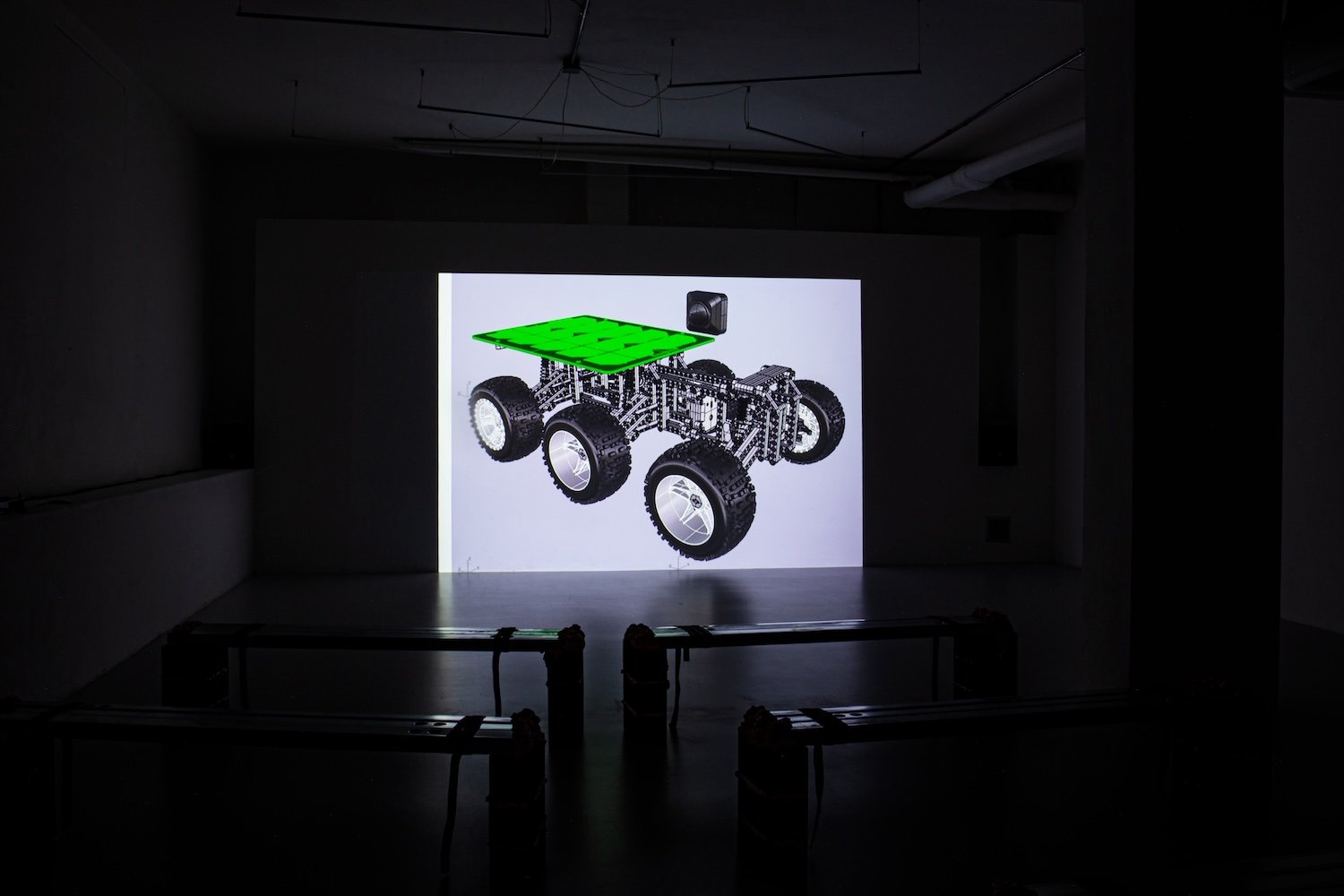
ShyBot was conceived and presented at the inaugural Desert X art Biennial held in the Coachella Valley in Palm Springs, CA, in February of 2017. It is an autonomous, self-driving, human-avoiding rover, solar powered, computer vision enabled and GPS tracker.
Highly site-specific in that California is a place now associated with advanced and innovative technology, artificial intelligence, and robotics, the Desert X biennial allowed Norma Jeane to work with other technologists in San Francisco to introduce an advanced piece of technology into a situation which is completely uncomfortable.
Taking inspiration from the Mars Rover, Norma Jeane considered a version of the Rover that did more than cruise around, recording and analyzing the landscape. What if, instead of an information-gathering emotionally-neutral mission, the Rover had an emotional mission? What if the robot chose to wander the desert because it wanted to be left alone, and the desert was a place where it felt most safe? What if the robot was…shy?
Following its disappearance (due to a data transmission malfunction) twenty 40 x 12 feet “Wanted” billboards were posted alongside the Los Angeles–Palm Springs freeway.
At the end of Desert x a short movie titled ShyBot dedicated to the making of, and the meaning of the small mechanical creature was edited and screened in various locations across Europe, China and USA. Meanwhile, ShyBot continued to wander the desert until he was finally found by chance a year and a half later in the Cathedral City area.
Norma Jeane is an artist who does not wish to be identified. In over thirty years of activity they have delivered projects in some of the major museums and biennials around the world. Their work has been published in numerous art, fashion, design, and technology magazines as well as in newspapers, in Europe, Asia and North America.
Iva Kontic
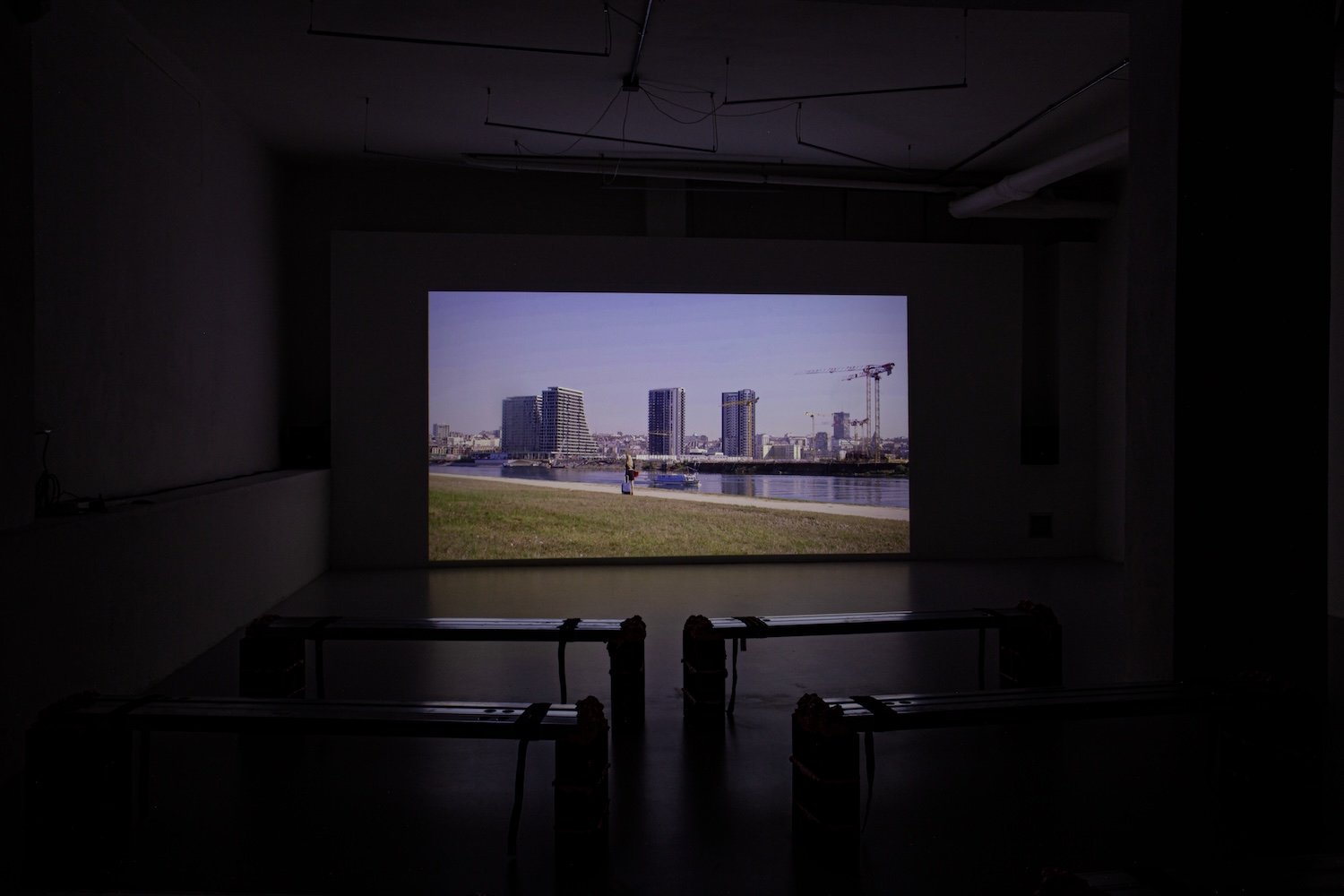
Enactments of Happiness
Video 4K, 08’00”, 2020-2022
An elegantly dressed woman with a travel trolley ventures into the construction site of the urban megaproject “Belgrade Waterfront”—nearly 2 million square metres of residential, office, and retail space, a new exclusive city within the city rising on the banks of Belgrade. Conceived through local political ambitions framed as national interests and born from the foreign investment of Emirati private developers, this concrete mushroom of buildings and skyscrapers has been growing steadily and relentlessly over the last decade amid violence, controversy, regulatory abuse, and public dissent—an ideological offspring of post-socialist transitional society and a perfect child of wild authoritarian neoliberalism.
Roaming along the fringes and sneaking through the work-in-progress of what some have nicknamed the future “Dubai of the Balkans” (or “an unlikely place for Gulf petrodollars to settle”, as others have described it), the author performs various scenes of the future life(style) promoted by the vast billboards that conceal foundation pits, diggers, and mountains of debris from the landscape that once existed, while the children’s classic “If You’re Happy and You Know It” murmurs in the background…
Iva Kontic is a visual artist, academic researcher and professor originally from Belgrade (Yu, 1982). She graduated in Painting from Accademia di Belle Arti di Brera, Milan, obtained a Master’s degree in Fine Art from Goldsmiths College, London, and earned a Master’s degree in Film Studies from the University of Amsterdam. She holds a PhD in Multimedia Arts from the University of Arts in Belgrade. Her works have been exhibited in numerous international exhibitions and festivals at institutions such as Museo Reina Sofía, Museo della Permanente, TEA Tenerife Espacio de las Artes, Fondazione Giangiacomo Feltrinelli, Kassel Dokfest, European Media Art Festival, Mixer Festival, Trieste Film Festival, the Cultural Centre of Belgrade, among others. Iva has participated in various academic conferences and symposia at institutions such as the Blinken Open Society Archives, Central European University, University of Warwick, University of Malta, the Institute for Cultural Development Research, and she published AGIT-PROP-FLASH-MOB. The Workers’ Dance into the Twilight (ProArtOrg), a book exploring the possibilities of social engagement in performance art through the use of urban public space.
Bruno Muzzolini
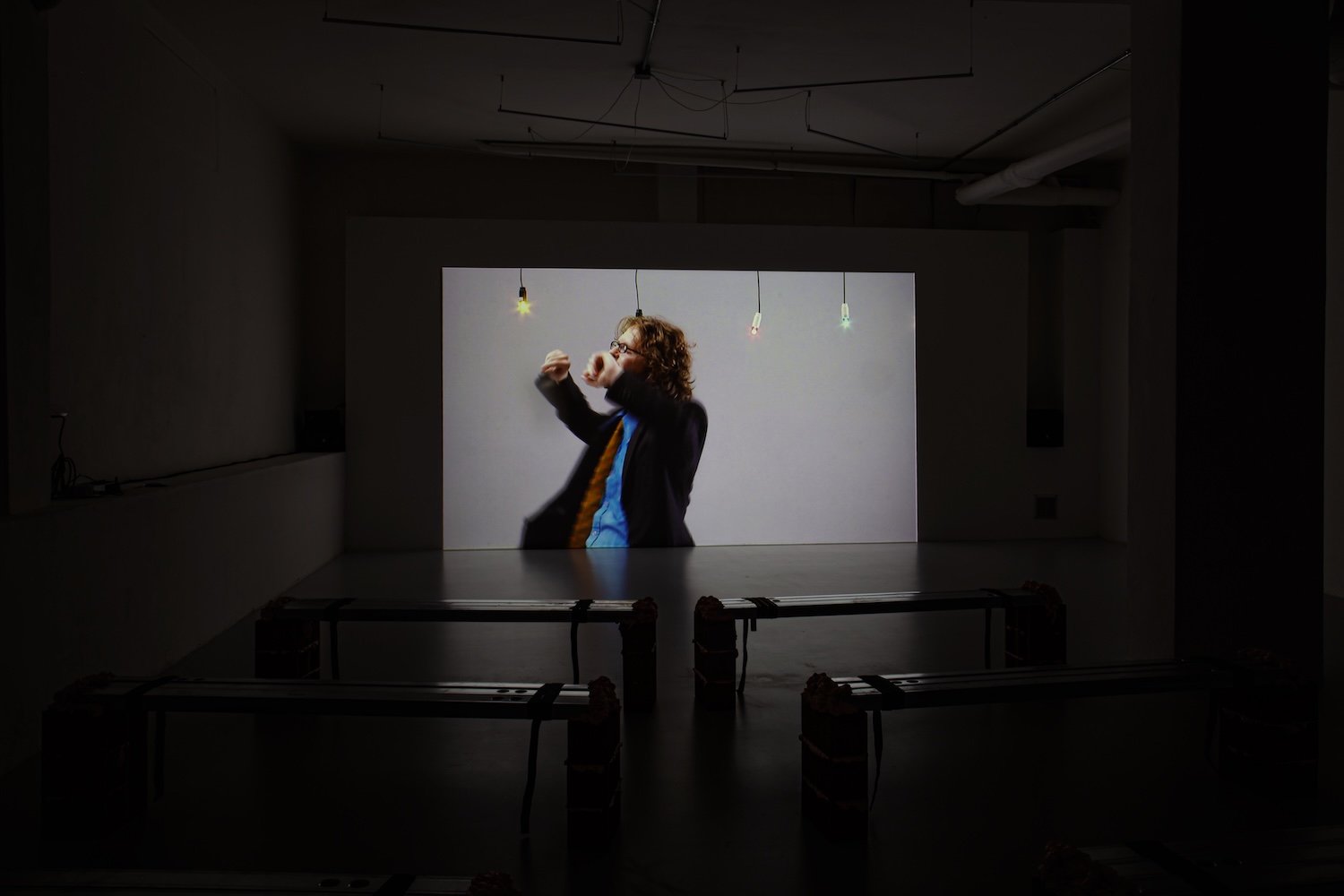
Disco drum machine
Full HD video, 05’44”, 2009
In a space defined by a small, precarious stage, a man dances alone with unrestrained energy, listening to music through earphones. The rhythm is underscored by the stamping on the wooden stage and by the music, which we perceive in a fluctuating, irregular way. In this action, the dancer’s unbridled vitality—heightened by the video editing—is the pure presence of a body engaged in a choreography of error, inhabiting the space in an exasperated short circuit with a bittersweet edge.
Bruno Muzzolini was born and lives and works in Brescia. After graduating in Painting from the Accademia di Belle Arti di Brera in Milan, he studied at the IUAV in Venice, specialising in Design and Production of Visual Arts. He currently teaches Painting at the Accademia di Brera. His works have been exhibited in various public and private spaces in Italy and abroad, in solo and group shows, including: Banquet Gallery in Milan, Artericambi in Verona, Galleria On the Move in Tirana, Albania, MART in Trento, Italy, Pilot Gallery in Istanbul, Turkey. He has participated in the 54th International Art Exhibition of the Venice Biennale, Italian Pavilion, Corderie dell’Arsenale, invited by Tiziano Scarpa, at the National Gallery of Arts in Tirana, Albania, at Fabioparis Art Gallery, at the Museo de Arte de Medellín in Colombia, at Parallel in Vienna, Austria, at Centrale di Fies in Dro, Italy, at Videodrome, elettro+, Florence, at The Living Art Museum and at the Asi Art Museum in Reykjavik, Iceland, and at the Multimedia Gallery in Brescia. In 2007 one of his video works won first prize at the Venice Art Fair and was awarded at the 14th Onufri Prize at the National Gallery of Arts in Tirana.
Emilija Škarnulytė
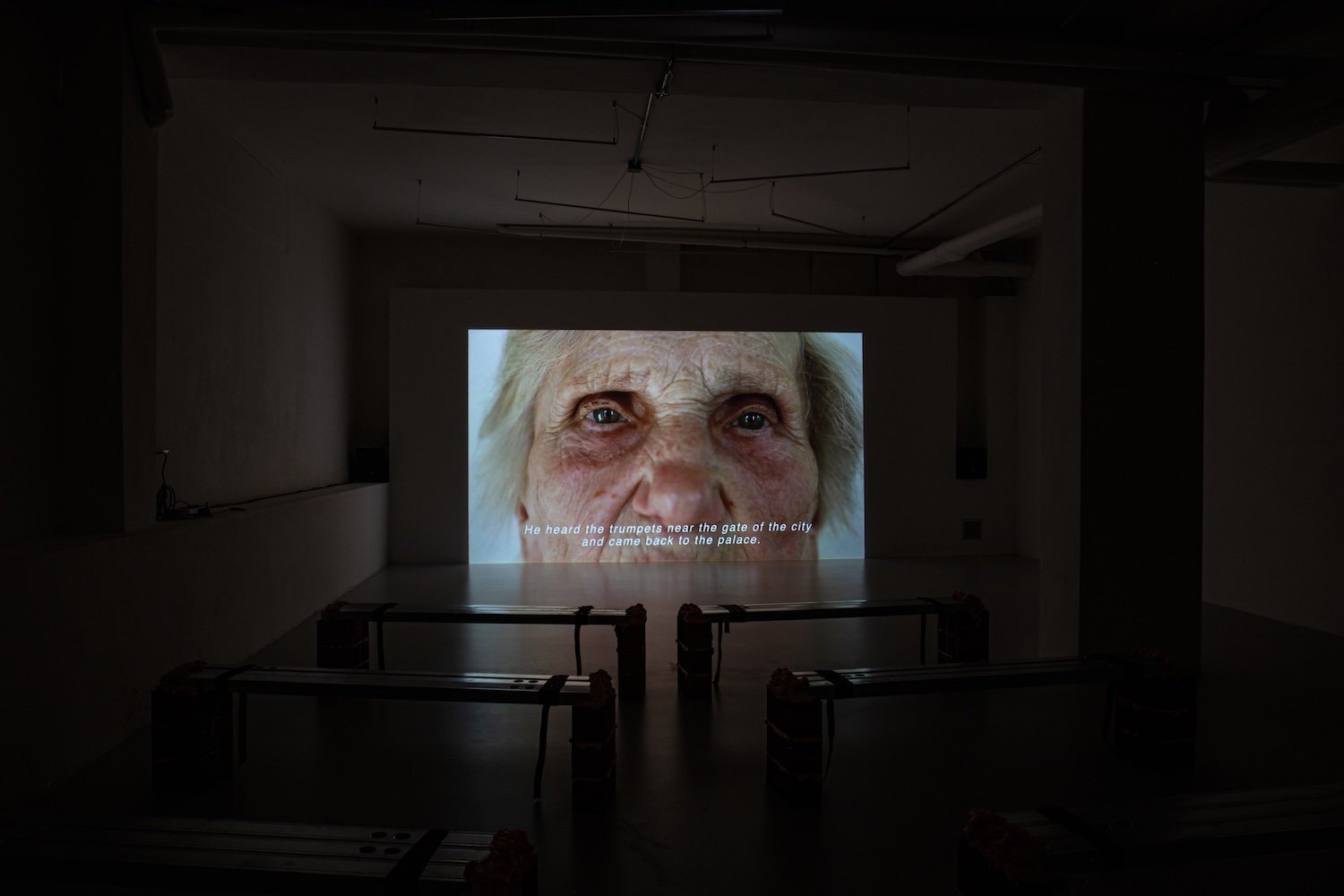
Aldona
16mm film HD, 13’00”, 2013
In the spring of 1986, Aldona lost her vision and became permanently blind. The nerves in her eyes were poisoned. Doctors claimed that it was probably due to the Chernobyl power plant explosion. The film follows her through a daily sojourn to Grutas Park, touching both the past and the present.
Emilija Škarnulytė is an artist and filmmaker, born in Vilnius, Lithuania. Working between documentary and the imaginary, Škarnulytė makes films and immersive installations exploring deep time and invisible structures, from the cosmic and geologic to the ecological and political. Winner of the 2019 Future Generation Art Prize and the Ars Fennica Award 2023, Škarnulytė represented Lithuania at the XXII Triennale di Milano and was included in the Baltic Pavilion at the 2018 Venice Biennale of Architecture. Her immersive installation Æqualia (2023)is opening at Canal Projects, New York on January 19, 2024. She most recently presented works at MORI Art Museum, Kiasma, Gwangju Biennale, Helsinki Biennale, Vilnius Biennale, Henie Onstad Triennale, and Vilnius Biennale of Performance Art. She has had solo exhibitions at Ferme-Asile, Sion (2023); Kunsthaus Pasquart, Biel/Bienne (2021); Den Frie, Copenhagen (2021); National Gallery of Vilnius (2021); Künstlerhaus Bethanien, Berlin (2017); and Contemporary Art Centre CAC of Vilnius (2015). She has films in the collections of the Centre Pompidou, Kadist Foundation, HAM, and IFA, and her works have been screened at the Tate Modern and Serpentine Gallery in London, Centre Pompidou in Paris, Museum of Modern Art in New York, and numerous film festivals including in Rotterdam, Busan, and Oberhausen. She is a founder and currently co-directs Polar Film Lab, a collective for analogue film practice located in Tromsø, Norway and is a member of the artist duo New Mineral Collective.